
A Community Rebuilding After Violence
Clown in a CornfieldThis flow traces Kettle Springs’ movement from long economic decline and attempted violent restoration toward a damaged, contested recovery.
increasing Bearing strength in each event
 decreasing
Bearing strength in each eventdecreasingA Town Losing Momentum
A Town Losing Momentum
Declining prospects
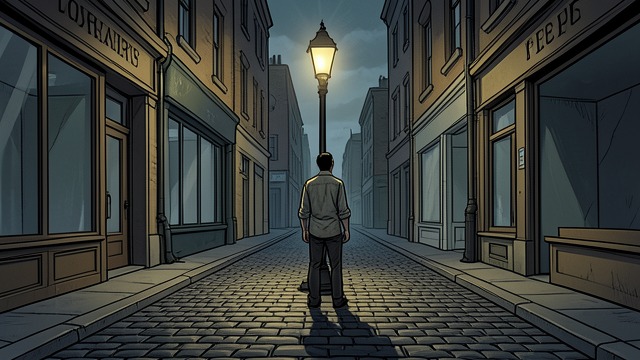
Baypen’s closure has weakened local employment and left shuttered storefronts and underused farmland. Quinn notices the town’s worn houses and the sense that its best days are over.
A promise of revival
Many residents hope that Arthur Hill will reopen the factory or invest in town businesses. That hope makes economic recovery inseparable from the Hill family and from arguments about what the town used to be.
Violence Called Renewal
Violence Called Renewal
An extreme restoration plan
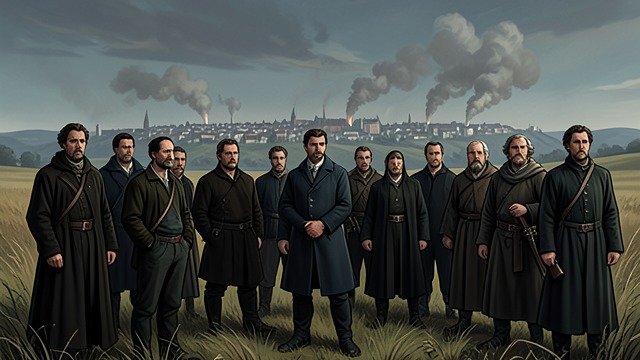
The Improvement Society’s leaders claim that eliminating teenagers will allow the town to recover. They present murder as a form of cultivation, using the language of crops and community maintenance.
The contradiction exposed
The attack destroys lives and leaves the town’s institutions and infrastructure in crisis. Its leaders’ promise to restore Kettle Springs is contradicted by the damage their plan creates.
An Uneven Recovery
An Uneven Recovery
New attention arrives
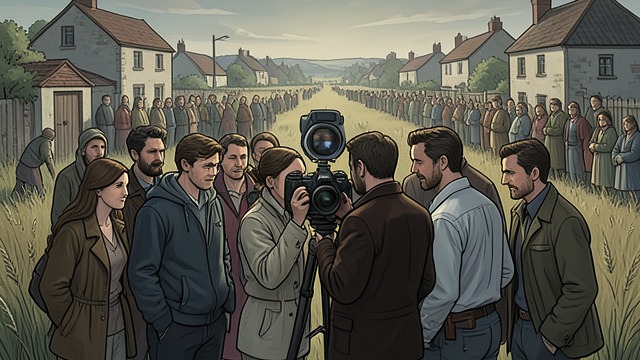
Investigators, journalists, and documentary crews bring new visitors to Kettle Springs. Their presence provides local businesses with a temporary economic boost even as residents mourn and the population falls.
Work beyond the spectacle
Residents remove Frendo imagery and begin restoring places such as the theater. Quinn and Glenn choose to remain, but the town’s recovery is practical and uncertain rather than a return to an idealized past.
before Quinn’s arrival
the night of the massacre
two months after the massacre
